

Twenty years ago, after a creative writing workshop, an elderly farmer came up to me and told me shy and proud and in confidence that she had been writing for years, noting her thoughts, “almost like a diary”. I’m always interested in how people write, so I asked her, and she told me that she had been using the margins of her daily kitchen calendar sheets and a well-sharpened pen. She wrote in the very early morning when she was alone in the kitchen, having her first coffee. She collected the small pieces of paper in the kitchen drawer where the odds and ends are kept. “Because that’s the drawer my husband never opens…” .
Each morning, she scribbled in the margins of a very small calendar sheet using both sides of the soft and thin paper, and then hiding her writing (and the fact that she was writing at all) from her husband.
It seemed as if to her, the kitchen calender sheet with its short quotes, mostly from the Bible, was her daily prompt. The fact that she had empowered herself to connect, take up the challenge of a writing prompt, comment, muse about, and actually write down her response and her thoughts had to be kept a secret. She hid the process and the product from the world she inhabited with her family on the farm.
Scribbling in the margins seemed to be an activity best not mentioned, the product secretively stashed away, precariously hidden inside an obsolete kitchen drawer.
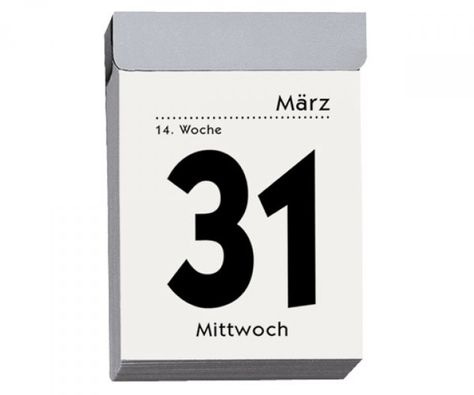
A typical German Kitchen Calender, with one sheet for each day. On the back, you might find an inspirational quote.
Inhabiting a very limited liminal space inside her life for a short while on the break of her long workday, she created a precious few moments of belonging to herself, owning her thoughts, celebrating her being outside the boundaries of her daily life.
Limited and liminal, the space of the calender sheet, the time of break of day, and the obsolete secrecy of the kitchen drawer provided her with a precious and precarious vantage point to notice and note what seemed worthy of writing down.
In writing, we give our thoughts a lasting quality, we endow them with a little more durability, stability, tenability. When we write, we inhabit a space completely our own, free, at least potentially, of our obligations, our availability and accountability to others.
I see her sitting in her early morning kitchen like she were sitting on the hedge between the village and the forest, between the cultivated land, governed by custom, tradition, law, and rule on the one side, and the wilderness, the unregulated space of the forest, where the rules of the village don’t apply.
A hagazussa1, capable of seeing into both realms, a member of both worlds, but never of one alone. A farmer, farmer’s wife and mother, but not fully. A writer, owning her wild words and daring stories, but not fully.
A scribbler in the margins, practicing the craft of owning herself.
Hagazussa, lit. ‘hedge-rider’, or ‘hedge-sitter’. So hagazussa means ‘someone sitting on the hedge marking the boundaries of the village’. Derived from the old high German ‘haga’, meaning ‘hedge’ or ‘fence’, and ‘zussa’, meaning ‘sitting’, or ‘hovering’, or ‘riding’. The word could stem from a proto-Germanic root meaning ‘to sit’ as well as ‘to travel’, or ‘to journey’, evoking a picture of someone riding between worlds.
This gave me some chills. I often write my own morning notebook pages in the wee hours, my husband asleep beside me, my little dog curled up at my feet, I scribble away by the light of a candle on my bedside table, ready to slap the notebook closed if either of them begins to stir. Why do I need to keep this secret? These early morning fresh from sleep words feel so very tender and vulnerable, I can’t deny them to myself, but I do not want to share their existence with anyone, not even the one I love and trust.
I love this!!